
Breaking the GPU Memory Wall: Penguin Solutions Unveils Photonic HBM-Class Appliance

Executive Summary
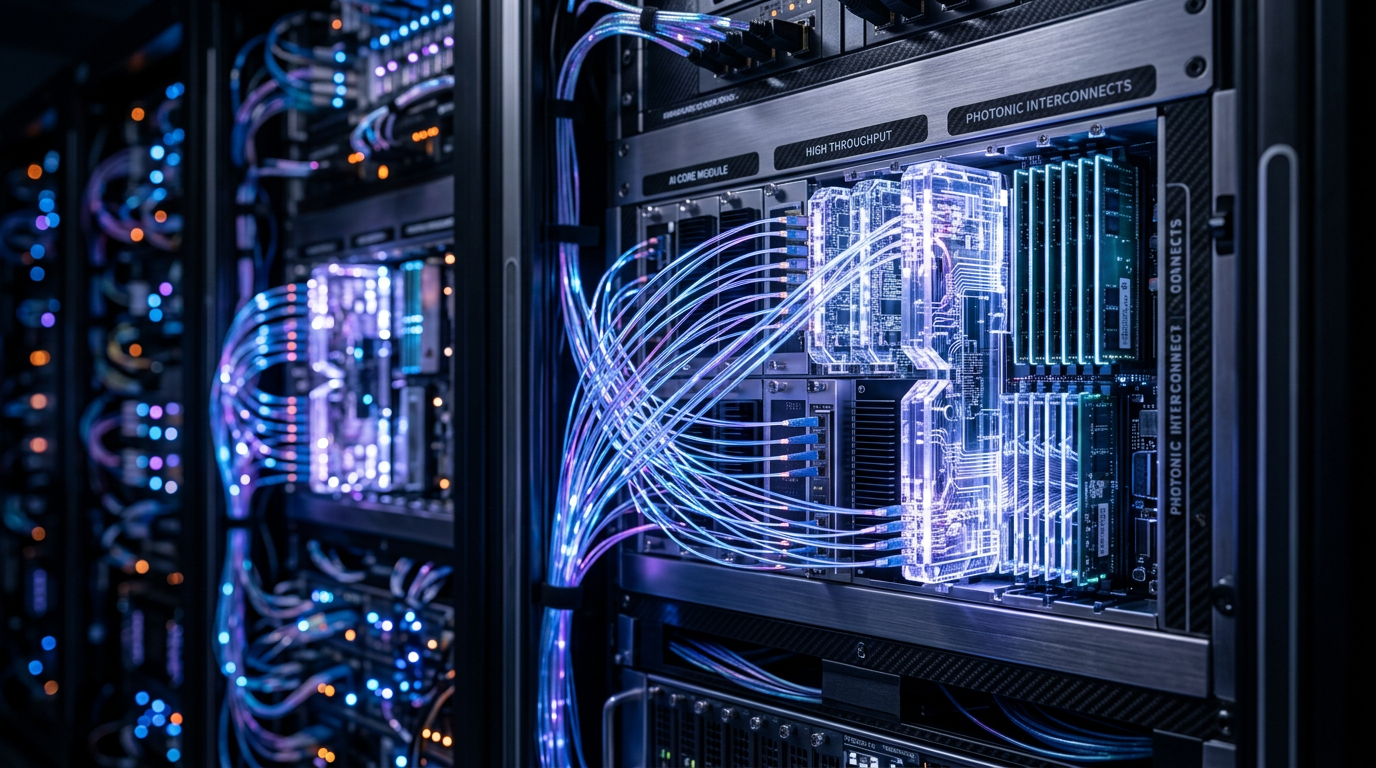
At the SC26 conference, Penguin Solutions unveiled the MemoryAI™ Photonic Appliance, a breakthrough in AI infrastructure designed to resolve the "memory wall" currently limiting agentic AI performance. By utilizing silicon photonics to enable the transparent sharing of disaggregated high-bandwidth memory (HBM) across multi-rack infrastructures, this appliance allows CPUs and GPUs to access memory at HBM-class data rates, significantly improving accelerator utilization.
Deep-Dive Technical Mechanics
The MemoryAI™ Photonic Appliance leverages Marvell® Photonic Fabric™ technology to extend memory access beyond the physical constraints of a single server chassis. Key technical specifications include:
- Bandwidth Performance: Targets 57.6 Tbps of total appliance bandwidth, specifically engineered to support high-demand AI inference.
- Scalable Capacity: Supports up to 16 TB of DDR5 RDIMM memory and 576 GB of HBM3E memory per appliance.
- Flexible Access Modes: Provides three distinct memory pool access modes: HBM Direct Mode, HBM-DDR5 Cached Mode, and DDR5 Direct Mode.
By replacing traditional copper interconnects with silicon photonics, the system reduces power consumption while maintaining the low-latency, high-throughput requirements necessary for agentic AI, where autonomous agents require rapid, reliable access to massive datasets.
Business & Engineering ROI
For CTOs and engineering leads, the MemoryAI™ Photonic Appliance addresses the critical issue of GPU underutilization caused by data bottlenecks. By disaggregating memory, organizations can:
- Optimize Token Economics: Increase the quality of tokens and overall throughput by ensuring GPUs are never starved of data.
- Maximize Infrastructure ROI: Extend the utility of existing compute clusters by pooling memory resources, reducing the need for over-provisioning individual server nodes.
- Future-Proof AI Factories: The architecture is designed to support the next generation of agentic AI workloads, which require significantly higher memory capacity than standard LLM inference.
Key Takeaways
- Silicon Photonics Integration: The shift from copper to photonic fabrics enables HBM-class data rates across multi-rack environments.
- Addressing the Memory Wall: The appliance directly mitigates the data bottlenecks that leave expensive GPUs idle.
- Availability: Sampling for select customers is scheduled for the second half of 2027.