Beyond Earth: The Rise of Data Centers in Space
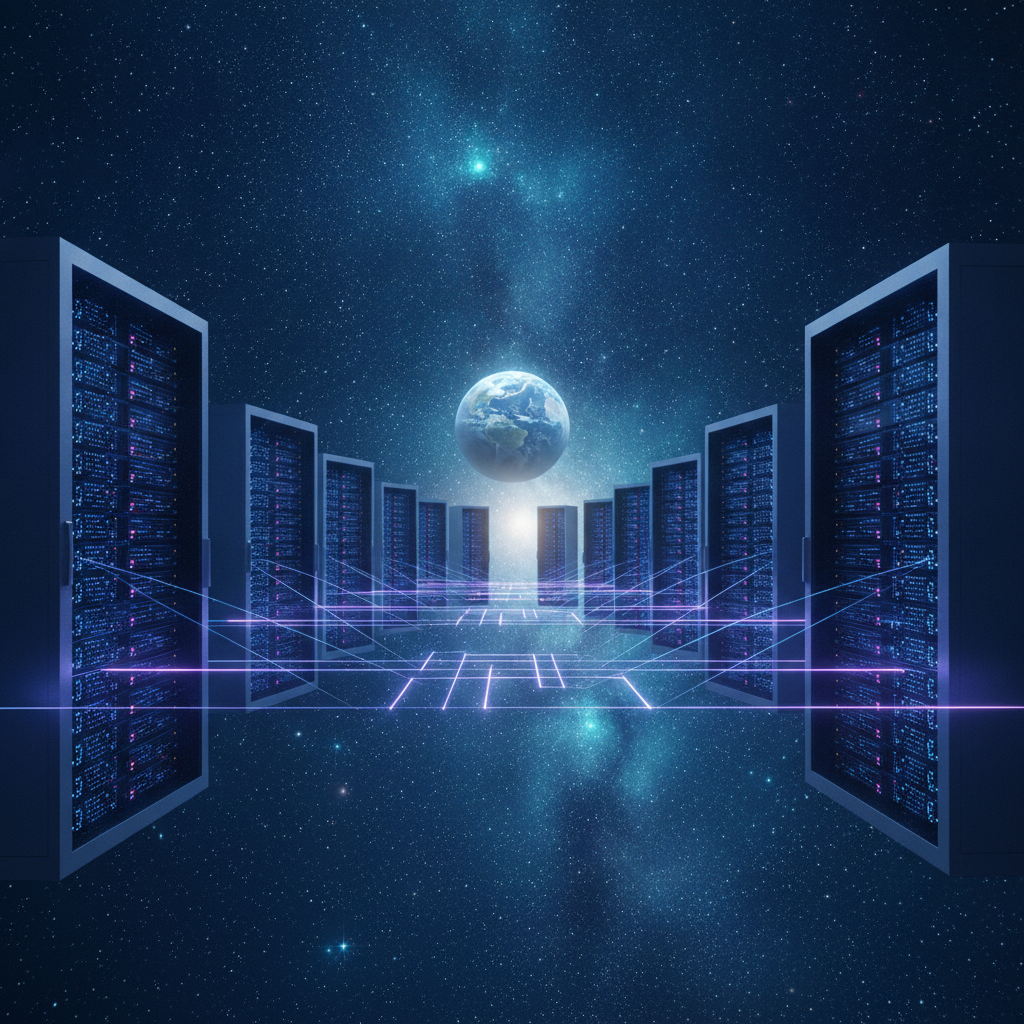

Beyond Earth: The Rise of Data Centers in Space
The digital world is expanding at an unprecedented rate. We're generating, processing, and storing more data than ever before, pushing the limits of terrestrial infrastructure. What if the solution isn't just bigger data centers on Earth, but off Earth? Welcome to the intriguing concept of data centers in space. It might sound like science fiction, but the reality is rapidly approaching, thanks to visionary leaders and technological advancements.
Why Look Up? The Stellar Advantages of Orbital Data
Why would anyone want to put a data center in orbit? The reasons are compelling for businesses looking for an edge:
- Speed and Latency: For certain applications, particularly those involving global communication or deep space missions, processing data closer to its source in orbit could dramatically reduce latency. Think about low-latency connections for remote operations or AI processing for space-based assets.
- Security: Physical security in space is inherently different. While not impenetrable, it offers a unique kind of isolation from terrestrial threats and geopolitical risks, making it an intriguing option for highly sensitive data.
- Cooling: The vacuum of space offers an incredible, virtually limitless heat sink. Cooling massive server farms is one of the biggest energy drains for traditional data centers; in space, this could be significantly more efficient, reducing both operational costs and environmental impact.
- Energy: Solar power is abundant in orbit. Satellites already run on solar panels, and scaling this for data centers could offer a sustainable, renewable energy source, potentially reducing reliance on fossil fuels and lowering energy bills over time.
- Disaster Recovery & Redundancy: An orbital data center could serve as an ultimate backup or a distributed network node, offering unparalleled resilience against natural disasters, widespread power outages, or even cyber-physical attacks on Earth.
The Visionaries: Elon Musk and Other Cosmic Contenders
When we talk about ambitious space ventures, Elon Musk and SpaceX are often at the forefront. While SpaceX's primary focus has been on reusable rockets and the Starlink satellite internet constellation, the infrastructure they're building lays a crucial foundation for future space-based data operations. Starlink, with its thousands of low-Earth orbit (LEO) satellites, is essentially a distributed network in space. It's not a data center in the traditional sense, but it demonstrates the capability to deploy and manage vast computational and communication networks beyond our planet. The vision of a Mars colony also implies the need for localized data processing, making space-based computation a necessity.
Beyond Musk, other players are emerging:
- Government Agencies: NASA, ESA, and other space agencies are continually pushing the boundaries of space technology, which will inevitably support future data infrastructure and applications.
- Startups and Innovators: Companies exploring in-orbit manufacturing and servicing are also looking into specialized data processing units designed for the harsh space environment. These might not be full-blown data centers yet but are critical stepping stones.
- Defense & Intelligence: For obvious reasons, these sectors are keenly interested in secure, resilient, and globally accessible data processing capabilities that are less vulnerable to terrestrial attacks and surveillance.
Earth-Sized Challenges for Off-World Data
While the potential is astronomical, the challenges are equally immense:
- Cost of Launch: Getting anything into space is incredibly expensive, though SpaceX has significantly driven down costs. Launching and maintaining a data center would still require colossal investment.
- Radiation: Space is a harsh environment. Servers and electronics need robust shielding against cosmic radiation and solar flares, which can cause data corruption and hardware failure, significantly impacting reliability.
- Maintenance & Upgrades: Repairing or upgrading equipment in orbit is a monumental task, requiring robotic assistance or astronaut missions, each adding layers of complexity and cost that far exceed terrestrial maintenance.
- Latency for Terrestrial Users: While great for space-based applications, routing data from Earth to an orbital data center and back introduces latency, which might negate some benefits for typical internet users. The real value might be for inter-satellite communication or data processing for space missions.
- Space Debris: The growing problem of space debris poses a significant threat to any orbital infrastructure, requiring advanced collision avoidance systems and robust design.
What This Means for Your Business
So, how does this futuristic concept impact your business today, or in the near future?
- Global Connectivity: Improved satellite internet (like Starlink) is already enhancing connectivity in remote areas, enabling new markets and operational models for businesses that were previously isolated.
- Edge Computing in Space: For businesses involved in satellite imagery, remote sensing, IoT in space, or even future asteroid mining, processing data on-orbit rather than sending raw data back to Earth will be transformative, saving bandwidth, time, and computational resources.
- Enhanced Resilience: For critical infrastructure or highly sensitive data, the option of off-world data storage could become a premium disaster recovery solution, offering an unparalleled level of data protection.
- AI and Machine Learning: The ability to deploy powerful AI models closer to data sources in space could unlock new insights for scientific research, Earth observation, and autonomous space systems, accelerating innovation across various sectors.
The Next Giant Leap for Data
Data centers in space are not a fantasy; they're a logical, albeit challenging, progression of our digital infrastructure. While the initial applications will likely be niche and high-value, driven by government and specialized industries, the foundational technologies being developed by innovators like Elon Musk are paving the way. As launch costs continue to fall and space technology matures, the idea of your business leveraging orbital data processing might not be as far-fetched as it sounds. The future of data is not just global; it's galactic.